Accessibility Tools

Visiting hours:
The National Museum of Art of Romania
, the Theodor Pallady Museum and the K. H. Zambaccian Museum can be visited: Wednesday-Friday 10am-6pm
Saturday-Sunday 11am-7pm, Monday and Tuesday closed. Free entry on the first Wednesday of the month.
The Art Collections Museum: Monday, Tuesday and Friday, 10am-6pm, Saturday and Sunday 11am-7pm, closed Wednesday and Thursday. Free entry on the first Tuesday of the month.
Last entrance: 1 hour before closing for The National Museum of Art of Romania and the Art Collections Museum and 30 minutes for the Theodor Pallady Museum, the K. H. Zambaccian Museum and the temporary exhibitions.
For guided tours, please make a reservation at secretariat@art.museum.ro at least 7 days in advance.
For visits to our museum without guided tours there is no reservation necessary.

On October 1, 2, 7, 8 and 9, the Historic Spaces will be closed.
Starting with Friday, 25 September the Oriental Art Gallery will reopen. The European Decorative Art Gallery and the Th. Pallady Museum will remain closed.
Thank you for your understanding.
The National Museum of Art of Romania

With an area of over 400 square meters, the European Decorative Art Gallery, composed of six rooms, illustrates four centuries of history of taste and refinement, innovations, manufactures and European craftsmen from Austria, Belgium, the Czech Republic, Switzerland, France, Germany, Italy, Holland, Spain, Russia from the 16th-19th centuries and completes the museum's permanent exhibition, alongside the European Art Gallery and the National Gallery.

Included in the exhibition is a wonderful marriage box made in Dresden in 1586, ceramics from the famous faience factories of Delft (Netherlands), Manises (Spain), Montelupo Fiorentino and Savona (Italy), Rouen, Moustiers and Sèvres (France), Meissen (Germany), Provençal furniture and French tapestries, as well as special silver pieces alongside the famous Bohemian crystal glasses. The craftsmanship of Russian craftsmen can be admired in the delicate cloisonné silver pieces, the niello silver glasses or the Punch Bowl made by the famous Fabergé workshop. Also, a precious collection of watches illustrates the excellence of jewelers and watchmakers from the most important workshops in Europe.

The presence of these objects in Romania attests to the fact that our country has always been in a European circuit of exchanges of cultural values.

Europe was not only the space for the manifestation of secular practices in the artistic field, but also a place where the creative input from other continents merged into defining expressions of the exceptionality of the human spirit. These varied cultural influences have, over time, contributed to the definition of a European identity that is also reflected in the gallery display.

The opening of the European Decorative Art Gallery is due to a passionate and involved team from the National Art Museum of Romania, made up of museographers, conservators, restorers and technicians, but also to an important contribution of sponsors and partners without whom this far-reaching project would not be possible. would have been possible: Association "Friends of MNAR", Raiffeisen BANK, Camelia Șucu, Coca-Cola Romania, Romcar, Banca Comercială Română, Tomini Trading, TNT Romania, Solmar Trading Group, Soft Medica, Romtelecom, Unilever, Veronica Savanciuc, ITH Management Office, CitiBank Romania, Leadership Development Romania, Banca Națională a României, Topo Capital Corporation.

The spaces that house this gallery have gone through an extensive redevelopment process, being heavily affected by the earthquake in 1986 and the fire in 1989. The opening required the creation of showcases in accordance with the latest standards in the field, ensuring both security and high standard display.

The European Decorative Art Gallery benefits, for the first time, from a digital component, the MyMNAR application, to be used during the visit in the gallery to complement the exhibition course in an interactive way.

Access to the European Decorative Art Gallery is through entrance A2, floor 3, Calea Victoriei 49-53, Bucharest, Wednesday - Friday, 10:00 - 18:00 and Saturday- Sunday, 11:00 - 19:00.

   

Romanian Modern Art Gallery

Romanian Modern Art Gallery

The Romanian Modern Art Gallery tells the story of Romanian art from the mid-nineteenth to the late twentieth century. Representative works by Theodor Aman, Nicolae Grigorescu, Ioan Andreescu, Theodor Pallady among others, illustrate connections with contemporary French painting while those of M.H. Maxy, Marcel Ianco, Victor Brauner trace the contribution of Romanian art to the European avant-garde of the 1920s and 1930s. Early sculptures by Brancusi reveal the master’s will to break away from academic tradition and find a way of his own. 

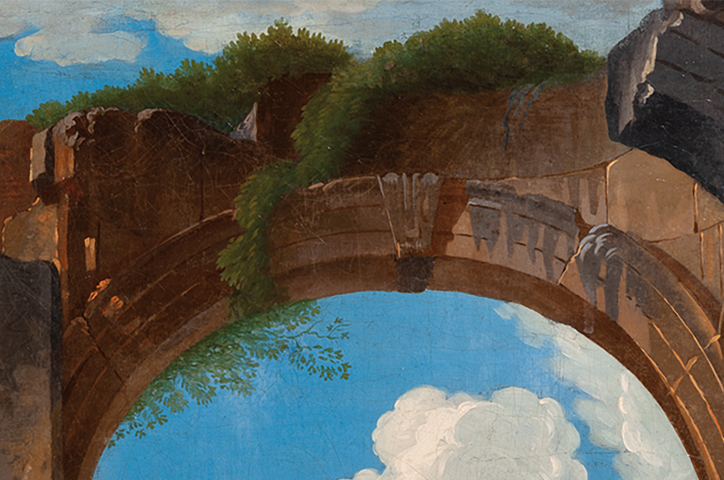
Nostalgia. Remembrance. Recapture European Landscape and Ruins in the 16th-19th Centuries

Nostalgia. Remembrance. Recapture European Landscape and Ruins in the 16th-19th Centuries

Curator: Malina Contu
Visiting hours: Wednesday - Sunday (10:00 to 18:00)
Last entrance: 17:30
Ticket price: 12 lei/ 6 lei/ 3 lei

The Art Collections Museum

The Art Collections Museum

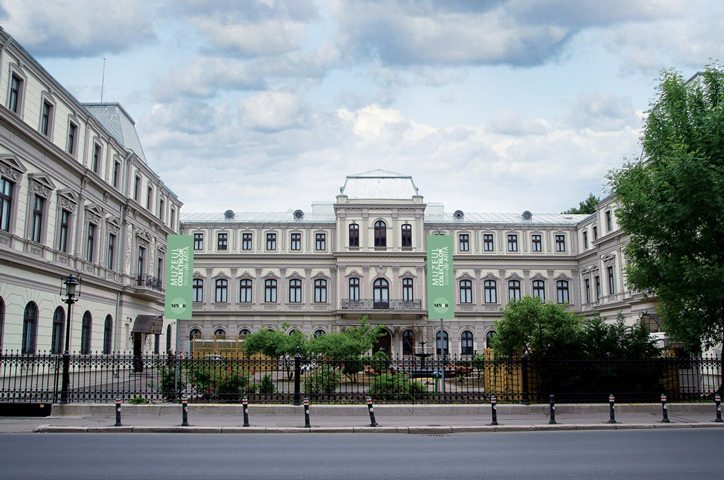
Inaugurated in 1978 as a Department of the National Museum of Art of Romania, the Art Collections Museum showcases artistic interests that prevailed in Romanian society from the early 20th century onward. Over 30 collections on permanent display incorporate a variety of art pieces and collectibles, ranging from Romanian and European fine and decorative arts to Oriental art. Donated over nearly a century by both collectors and artists, they bear witness to their owners’ taste and economic power, their leaning toward famous names or contemporary art, as well as to the artists’ particular interests, surroundings, and daily studio practice. Works by well-known Romanian painters such as Theodor Aman, Nicolae Grigorescu, Ioan Andreescu, Nicolae Tonitza, Gheorghe Petraşcu, Theodor Pallady, Lucian Grigorescu, Iosif Iser, Camil Ressu, Francisc Şirato, Alexandru Ciucurencu, Dimitrie Ghiaţă are exhibited alongside European and Japanese prints and drawings, French furniture, Oriental carpets, and folk icons from Transylvania. This unique museum is hosted by the former Romanit palace. The building, an example of modern Bucharest architecture, was recently restored and refurbished. Wherever possible, displays suggest the original layout and atmosphere of individual collections.

Facebook Page

Acest site folosește cookies

Folosim module cookie pentru a vă pune la dispoziție caracteristici de social media și pentru a analiza traficul. Navigând în continuare, vă exprimați acordul asupra folosirii acestora.