


Cotoșman & co. Lecția lui Livius Ciocârlie
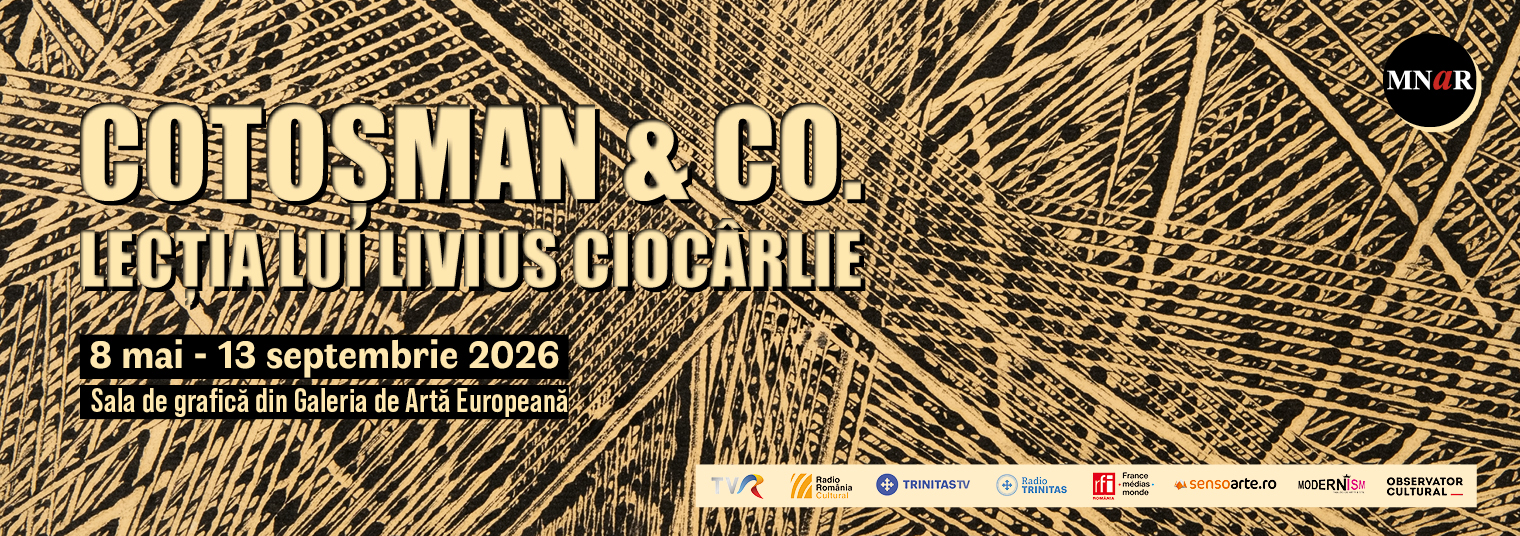
8 mai – 13 septembrie 2026.
Curator: Erwin Kessler
Muzeul Național de Artă al României vă invită la vernisajul expoziției Cotoșman & co. Lecția lui Livius Ciocârlie, care va avea loc în data de 7 mai 2026, la ora 18.00.
Expoziţia este organizată de Secţia de Arte grafice şi rămâne deschisă în sala dedicată artelor grafice din Galeria de Artă Europeană în perioada 8 mai – 13 septembrie 2026.
Cu peste 40 de lucrări, expoziția reunește ansamblul pieselor semnate de Roman Cotoșman din colecția Livius Ciocârlie, de la pictură și grafică la lucrări pe lemn, de la portrete timpurii la compoziții minimaliste ale maturității, alături de o selecție de lucrări de Constantin Flondor.
Livius Ciocârlie (n. 1935) este un foarte cunoscut critic literar, eseist, profesor universitar și scriitor, fiind printre cei mai subtili memorialiști din ultimele decenii și totodată unul dintre cei mai loiali colecționari de artă. Chiar și acum, la peste 90 de ani, Livius Ciocârlie este devotat figurii și operei lui Roman Cotoșman (1935-2006), artist cu un rol aparte în peisajul neo-avangardei românești, unul dintre primii experimentaliști care au re-modernizat limbajul și practicile artistice locale, la mijlocul anilor 60.
Co-fondator al grupului timișorean 111 (activ între anii 1966-1969), alături de Ștefan Bertalan și Constantin Flondor, Roman Cotoșman a emigrat imediat după aceea în SUA și s-a stabilit la Philadelphia, unde și-a continuat experimentele constructiviste și opera dedicată formelor abstracte, minimaliste. Pe cei doi i-a apropiat inițial nu doar fondul cultural comun, specific bănățean, ci și platforma intelectuală timpurie, interesul pentru structuralism, semiotică vizuală și literară, pentru o viziune progresistă asupra creației artistice.
Cu timpul, profilul relației a căpătat alte valențe existențiale și s-a definit tot mai mult ca împărtășire a unui destin cultural și uman, în ciuda miilor de kilometri care îi despărțeau, în ciuda regimurilor politice, chiar în ciuda carierelor diferite și a relațiilor contrastante cu boala, cu vârsta și cu apropierea morții. Vizite, cadouri, piese încredințate de către artist prietenului critic (literar) pe parcursul întregii vieți au conturat în timp o colecție fondată pe o veritabilă, unică lecție de profundă prietenie. Proximitatea caracterelor celor doi intelectuali i-a plasat în acea zonă specială a creației reflexive, preocupată de concretul obiectului, de perfecțiunea tehnicii și de prezența materialului ca atare -viața, literatura, mijloacele și procedeele artistice- prezentate extrem de rafinat, dar totodată clar, explicit, anti-baroc și anti-liric.
Acces:
Sala de Grafică din Galeria de Artă Europeană (Calea Victoriei 49-53)
Program:
Miercuri-vineri, orele 10-18, sâmbătă-duminică 11-19, luni și marți închis.
Prima zi de miercuri din lună intrarea este gratuită.
Expoziția-eveniment Muzeul Muzeelor
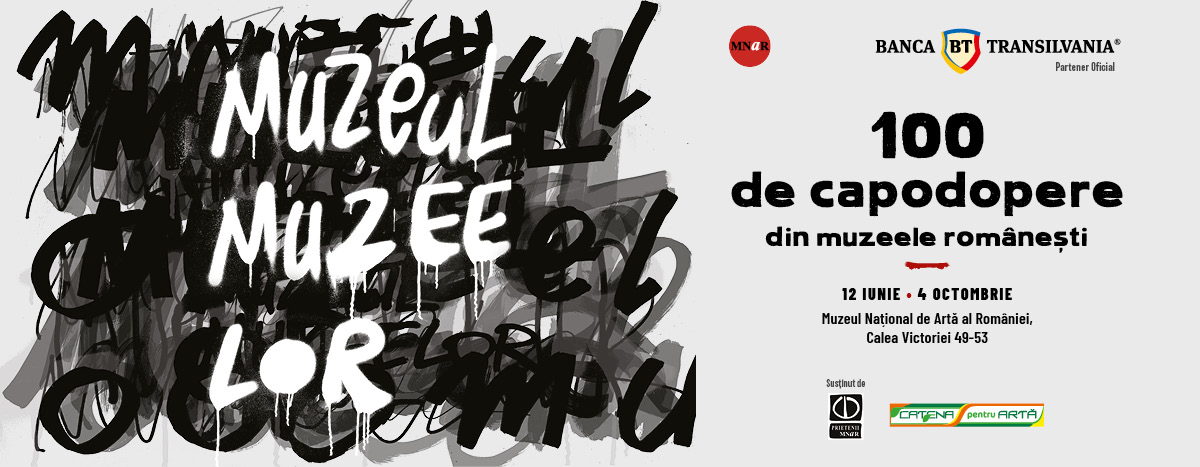
Muzeul Muzeelor prezintă peste 100 de piese excepționale, selectate din patrimoniul a 20 de instituții muzeale din toată țara, precum și din colecțiile permanente ale Muzeului Național de Artă al României. Rezultatul este o hartă a capodoperelor cunoscute sau mai puțin cunoscute, pe care publicul le poate descoperi de-a lungul și de-a latul țării și, totodată, o invitație de a călători în timp și în profunzimea lumii vii a artelor frumoase. Muzeul Muzeelor propune publicului unica experiență imersivă reală și autentică: contemplarea directă a capodoperelor într-un spațiu calm, dedicat în întregime acestora, fără artificii, fără grabă și fără tehnologii invazive.
Parcursul complex al expoziției reunește opere, epoci și medii artistice dintre cele mai diverse, și desființează granițele geografice și cronologice, precum și limitările convenționale ale criteriilor stilistice și muzeografice rigide. De la misterioșii idoli neolitici ai culturilor Cucuteni și Gumelnița la statui antice precum fascinantul șarpe Glykon, de la capodopere de Mantegna, Rubens și Nicolae Grigorescu la picturile excepționale și unice în România de Cézanne și Bonnard, și de la manuscrise prețioase, extrem de rar sau chiar niciodată prezentate publicului, la icoane și broderii cu fir de aur și argint din România și din Europa, dar și din Orientul Mijlociu sau Japonia, Muzeul Muzeelor reunește o suită de piese de o valoare inestimabilă, care se pun reciproc în lumină într-un veritabil dans al creației și al căutării frumosului, binelui și al celor mai profunde ori înălțătoare vibrații ale spiritului uman.
Născut din dorința de a elibera curatorii de convențiile profesiei și de a regăsi impulsul autentic al vocației – dragostea pentru frumos și bine –, Muzeul Muzeelor este o sinteză care pune publicul față în față cu arta, invitând fiecare vizitator să construiască propriile punți culturale și emoționale, inefabile și atemporale, între operele care alcătuiesc muzeul ideal al fiecăruia dintre noi, acolo unde cele mai diverse opere se înrudesc, indiferent dacă aparțin muzeelor de arheologie, istorie, etnografie sau de artă veche, modernă ori contemporană.
Expoziția va putea fi vizitată în perioada 12 iunie - 4 octombrie 2026, la MNAR, parterul Galeriei Naționale.
Partener oficial: Banca Transilvania
Expoziție realizată cu sprijinul: Asociației Prietenii MNAR
Parteneri instituționali: Complexul Muzeal „Iulian Antonescu” - Bacău, Biblioteca Academiei Române - București, Institutul de Arheologie „Vasile Pârvan” - București, Muzeul Național de Istorie al României - București, Muzeul Municipiului - București, Muzeul Memorial „Nicolae Grigorescu” - Câmpina, Muzeul de Artă - Craiova, Muzeul de Artă - Constanța, Muzeul de Istorie Națională și Arheologie - Constanța, Muzeul Regiunii Porților de Fier - Drobeta Turnu-Severin, Muzeul Mitropoliei Moldovei - Iaşi, Muzeul Civilizaţiei Gumelniţa - Oltenița, Muzeul Județean de Artă Prahova „Ion Ionescu-Quintus” - Ploiești, Complexul Muzeal Național Neamț - Piatra Neamț, Muzeul Național Brukenthal - Sibiu, Muzeul Național Peleș - Sinaia, Muzeul Național de Artă - Timișoara, Muzeul de Artă "Dinu și Sevasta Vintilă" - Topalu, Institutul de Cercetări Eco-Muzeale „Gavrilă Simion” - Tulcea, Muzeul Județean „Aurelian Sacerdoțeanu” - Vâlcea
Expoziția „Brâncuși. Sindromul”
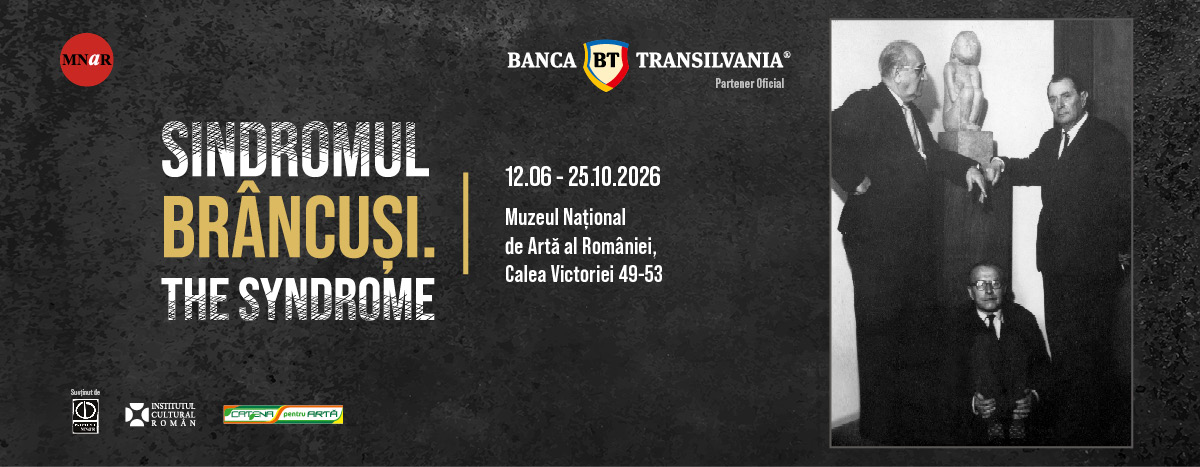
„Brâncuși. Sindromul” este prilejuită de împlinirea a 150 de ani de la nașterea lui Constantin Brâncuși și propune publicului o perspectivă aparte asupra influenței operei sale, analizând diversele tipuri de discursuri artistice construite în jurul lucrărilor și personalității celui mai important sculptor modern, din perioada interbelică până la ora actuală. Două fire narative, care se întrepătrund pe parcursul ultimului secol, pot fi puse sub semnul unui veritabil sindrom Brâncuși, devenit endemic în cultura românească. Pe de-o parte, expoziția arată forța modelatoare și dominatoare a personalității și operei brâncușiene asupra artei moderne și contemporane românești. Pe de altă parte, expoziția surprinde felul în care se formează și se propagă în spațiul vizual românesc figura mitică al lui Brâncuși, ca simbol național, cultural și spiritual.
Parcursul expozițional reunește lucrări care urmăresc atât imaginea artistului, cât și ecourile formale, simbolice și critice ale creației sale. Publicul va putea vedea, între altele, portrete ale lui Brâncuși semnate de M.H. Maxy, Theodor Pallady și Milița Petrașcu, lucrări-omagiu realizate de M.H. Maxy și Vasile Dobrian, sculpturi de Milița Petrașcu, Irina Codreanu, Hans Mattis-Teutsch, Ion Irimescu, George Apostu, Ovidiu Maitec sau Vasile Gorduz, precum și interpretări și recuperări contemporane ale motivelor brâncușiene - de la studiile lui Paul Neagu după „Pasărea în spațiu”, „Peștele”, „Domnișoara Pogany”, „Pasărea măiastră” și „Coloana”, până la lucrări de Iosif Kiraly, Teodor Graur, Mircea Cantor, Vlad Nancă, Michele Bressan sau Dan Perjovschi.
Odată cu consacrarea globală a lui Brâncuși, îndeosebi după 1970, ca „părinte al sculpturii românești”, figura lui devine tot mai apăsătoare în contextul în care nu doar în sfera culturală sonoritatea numelui său crește, ci se răspândește necontrolat în spațiul public. Astfel se ivesc în locurile cele mai diverse mini-coloane ale infinitului, mese ale tăcerii sau porți ale sărutului, golind de sens aceste repere-cheie ale creației sale, declanșând o invazie a kitschului, care merge de la utilizarea acestor bine-cunoscute forme ca decorațiuni pe o serie infinită de produse, de la coperte de caiet sau de carte la pachete de țigări.
Începând cu anii 90, fenomenul Brâncușomaniei, neafectat, ba chiar intensificat odată cu schimbarea de regim, este documentat, analizat și pus în discuție de către artiști precum Iosif Kiraly, Teodor Graur, Dan Perjovschi sau Mircea Cantor. Curatoriată de Judit Balint și Erwin Kessler, expoziția Brâncuși. Sindromul chestionează și pune în paralel toate aceste discursuri diverse, atât artistice, cât și din afara sferei artei, dezvoltate în jurul numelui și operei lui Brâncuși, oferind o imagine complexă a ceea ce înseamnă influența sa asupra spațiului social, cultural și imaginar românesc.
Expoziția va putea fi vizitată în perioada 12 iunie - 25 octombrie 2026, la MNAR, parterul Galeriei Naționale.
Partener oficial: Banca Transilvania
Expoziție realizată cu sprijinul: Asociației Prietenii MNAR, Institutul Cultural Român.
Parteneri instituționali: Muzeul de Artă Vizuală Galaţi, Centrul de Cultură „George Apostu”, Bacău, Muzeul „Vasile Pârvan”, Bârlad, Muzeul Băncii Naționale, Muzeul de Artă Constanța, Muzeul Județean Mureș, Muzeul Național de Artă Contemporană (MNAC), Muzeul Național de Istorie a României.
Romania – The Identity Representation of Traditional Costume in Art

Romania – The Identity Representation of Traditional Costume in Art
The National Museum of Art of Romania announces the extension by one month of the exhibition “Romania. The Identity Representation of Traditional Costume in Art”, namely for the period 12 February – 15 March 2026, with the regular visiting schedule: Wednesday–Friday 10:00–18:00 and Saturday–Sunday 11:00–19:00.
The National Museum of Art of Romania presents the exhibition-event:
“Romania – the identity representation of traditional costume in art”
Event held under the High Patronage of the President of Romania
Curator: Erwin Kessler
Curatorial team: Judit Balint, Mălina Conțu, Alina Petrescu, Emanuela Cernea, Costina Anghel
An exhibition organized in partnership with the Amzei Foundation.
Romania presents a vivid fresco of the artistic journeys of the ia, the Romania traditional blouse, across various techniques, from painting and sculpture to graphic art, photography, object, installation, film, music, posters, fashion, stamps, playing cards, vases, banknotes, books, albums, cartoons, and school textbooks.
SCHOOL KIT for middle and high school visits here
BUY TICKETS ONLINE HERE
Beginning as early as the 16th century, continuing through the 19th and 20th centuries, through socialist realism and into immediate contemporaneity, the Romanian ia has been a major artistic subject. Through its scope, diversity, and innovative interdisciplinary critical research, Romania constitutes an unprecedented platform through which the general public can access representations of the ie and traditional costume in artistic creations.
“Romania – the identity representation of traditional costume in art” is an exhibition, not a stance in favor of ideologies associated with the ia. The selection reveals how, over the centuries, a formal, symbolic, decorative, and at the same time ideological language has been articulated, in which the ia and the folk costume have played a pivotal role in aggregation, political promotion, and sometimes in the visual imposition of Romanian identity.
Over 320 pieces, drawn from the NMAR collections and from various national and international museums, from private collections and contemporary artists, offer the public the richest material for reflection and visual enjoyment on this subject ever presented in a museum. The exhibition broad historical and geographical scope contextualizes representations of Romanian traditional costume not only by comparison with artistic depictions of the traditional dress of other minorities in Romania (Hungarian, German), but also in relation to artistic representations of folk costumes from neighboring regions—Ukraine, Moldova, Bulgaria—in order to highlight similarities and differences, influences and constants.
These creations will be complemented by works by Henri Matisse, including the famous painting La Blouse Roumaine, an iconic masterpiece of universal modernity, part of the permanent collection of the Centre Pompidou in Paris—a work that left France for the first time as an exceptional loan for the exhibition “Romania – the identity representation of traditional costume in art” at NMAR.
This renowned work will function within the exhibition as an inverted mirror reflecting the consistent effort of Romanian national promotion and propaganda through the ia, which Matisse transposed into a purely aesthetic plane, with major impact on the development of postwar art, decisively contributing to the emergence of Pop Art strategies.
The Romanian ia, in its Matissean version, lies at the origin of the commercial success of the ia in French and international fashion industry. Specifically, these ways of using ia—sometimes excessive, as forms of cultural appropriation—are presented in the exhibition in order to reveal the two interconnected major dimensions of the ia in contemporary imagination: the identity-ideology one and the decorative-commercial one.
The exhibition and its accompanying catalogue highlight the use of traditional costume, especially the ia, in the formation, transmission, and imposition of genuine discourses of national identity, from the earliest times to the present day.
Representations of the ia in Romanian art in the 16th century are followed by the first decisively ideological and propagandistic representations in the 19th century, such as the portrait of Maria Bibescu by painters Constantin Lecca and Carol Popp de Szathmari and the portrait of Maria Rosetti—as a symbol of the Romanian Homeland—by Constantin Daniel Rosenthal, followed by Nicolae Grigorescu and his epigones; by the photographic and pictorial campaign of national legitimation of the royal family through the ia and traditional costume (from Queen Elisabeta I to Queen Marie); by the reconceptualization of the ia in representations of national-specific art during the interwar period, as well as in the Romanian avant-garde. The return to the ia as a visual factor of social and national identity in socialist-realist art and in the official art of the communist regime is contrasted with the rediscovery of the ia in the spiritualist, Romanian nationalist and anti-communist discourse of neo-Orthodox groups during the 1980s, as well as with the subversive incursions of contemporary critical art.
The rendering of the phenomenon of the political appropriation of the ia as an instrument of national and international propaganda after 1990 is presented through various works of contemporary art and through the documentation of certain achievements, but especially of political and visual communication excesses related to the ia as an established identity marker.
As a background to this historical tendency to impose the ia as a standard vehicle of identity, the exhibition consistently presents, throughout its course, the contrast with actual everyday clothing, with prevailing fashion in various periods—from the “German-style” clothing of the bourgeoisie to the French-influenced attire of the aristocracy; from the military uniforms of the first half of the 20th century to the monotonous fashion of the communist period or the explosive and diverse fashion of the post-1989 era. Against the historical backdrop of these everyday fashions, the trans-historical, ideological model of the ia and its identity-national use stands out, with its advantages and its drawbacks and its inherent risks, which the NMAR exhibition renders visible and accessible to our society in order to encourage attention, reflection and creation.
Related events: Throughout the exhibition period, symposia, debates and presentations, concerts, film screenings related to the theme of the ia and traditional costume will be organized.
The exhibition includes a lounge space where visitors have the opportunity to embroider, draw, take photographs or participate in weekend workshops for children and families in a relaxed and creative atmosphere.
The selected pieces come from the NMAR collection, from Romanian artists and collectors, and from 30 partner museums and institutions:
Musée national d’art moderne – Centre Pompidou, Paris; Fondation Louis Vuitton, Paris; Galagan Art Museum (Chernihiv, Ukraine—a difficult but exemplary collaboration under the current war conditions); National Gallery in Sofia, Bulgaria; National Museum of Art of Moldova, Chișinău; Brukenthal National Museum, Sibiu; Cluj-Napoca Art Museum; Peleș National Museum; “Baia Mare Artistic Centre” County Art Museum; National Museum of the Romanian Peasant; National Library of Romania; Arad Museum Complex; “Iulian Antonescu” Museum Complex – Bacău Art Museum; National Museum Complex “Moldova” Iași – Art Museum; Mureș County Museum; Galați Visual Arts Museum; Museum of the Criș County, Oradea; ASTRA National Museum Complex – Sibiu; Brașov Art Museum; “Holy Three Hierarchs” Monastery in Iași; National Museum of Romanian History; “Ion Ionescu-Quintus” Prahova County Art Museum; Piatra-Neamț Art Museum; Civic Academy Foundation – Memorial Museum of the Victims of Communism and of the Resistance in Sighetu Marmației; Bucharest Municipality Museum; “George Oprescu” Institute of Art History; Library of the Romanian Academy, Stamps Room; National Museum of Contemporary Art of Romania / NMAC; National Archives of Romania; Romfilatelia.
Supported by: ”Friends of NMAR” Association, Catena Foundation for Art, DSBA, Men at Work, iGuzzini, La Blouse Roumaine Community, Geberit, Animawings, Austing, Camelia Șucu.
Cultural mobility partner: Suzuki Romania.
Access:
49–53 Calea Victoriei, Entrance A4, Ground floor of the National Gallery
Entrance fee: 60 lei; free admission on the first Wednesday of every month.
In the Dead of the Night. Works with Nocturnal Subjects from the Western Prints Collection of the Cabinet of Drawings and Prints (16th–18th centuries)

The National Museum of Art of Romania invites you to the opening of the exhibition In the Dead of the Night. Works with Nocturnal Subjects from the Western Prints Collection of the Cabinet of Drawings and Prints (16th–18th centuries). It will take place on Thursday, October 23, 2025, at 18:00, at NMAR on Calea Victoriei 49–53. The exhibition is a project of the Graphic Arts Department of NMAR, conceived by Patricia Bădulescu, curator.
This is a selection of Western prints from the 16th–18th centuries from the collection of the National Museum of Art of Romania, illustrating nocturnal scenes in various techniques. The theme of the exhibition explores a subject less studied in art history, as well as in exhibitions and specialized publications.
Although nocturnal scenes are often associated with painting, they were also approached in printmaking, another two-dimensional medium with expressive potential and distinct functions. The most widespread printmaking techniques in early modernity constrained artists to face specific challenges such as the absence of color and the need to suggest transitions from shadow to light solely through lines, textures and black-and-white contrasts.
In this context, artistic sensitivity and technical refinement become essential. Therefore, it is no coincidence that nocturnal imagery occupies a privileged place in the art of canonical figures in the history of printmaking, especially beginning with the 17th century. The exhibition includes graphic works by artists with a particular inclination for experimentation: Rembrandt Harmensz van Rijn and his followers, Giovanni Battista Piranesi, Francisco de Goya.
The works explore from various perspectives the atmosphere and symbolism of the night; they are grouped according to themes, authors and contexts. Representative works by the aforementioned masters are juxtaposed with groups of works by lesser-known but equally remarkable artists, such as Hendrick Goudt, Jan van de Velde II, Norblin de La Gourdaine.
The exhibition In the Dead of the Night. Works with Nocturnal Subjects from the Western Print Collection of the Cabinet of Drawings and Prints (16th–18th centuries) remains open in the hall dedicated to graphic arts within the European Art Gallery between October 23, 2025 and March 1, 2026 and will be accompanied by a series of related events for all audiences.
Program
Halloween Workshop. In the Dead of the Night
Description:
A workshop for families in which we create Halloween masks starting from various graphic elements found in the works present in the exhibition In the Dead of the Night. Works with Nocturnal Subjects from the Western Print Collection of the Cabinet of Drawings and Prints (16th–18th centuries). We visit the exhibition, read short “scary” stories about the night and the mysteries hidden in the darkness, then create our own stories and masks to frighten parents.
Date: Saturday, November 1, 11:00
Recommended age: 8–12 years
Number of participants: 5–15
Duration: 90 minutes
Price: 50 lei / participant
Registrations at: This email address is being protected from spambots. You need JavaScript enabled to view it.
Title: In the Dead of the Night. Linocut Workshop
Description
A workshop dedicated to the linocut technique, organized within the exhibition, where participants will be introduced to a brief history of the technique, with references also to other printmaking techniques: woodcut, etching, aquatint, which will be exemplified through the works in the exhibition. The workshop also includes a practical component, through which participants can experiment with the linocut technique.
Date: Saturday, November 15, 11:00
Recommended age: adults
Number of participants: 5–15
Duration: 90 minutes
Price: 60 lei / participant
Registrations at: This email address is being protected from spambots. You need JavaScript enabled to view it.
--- //---
Within the program Mysteries of the Night, we explore the metaphors of light and darkness in the prints of the exhibition In the Dead of the Night. Works with Nocturnal Subjects from the Western Print Collection of the Cabinet of Drawings and Prints (16th–18th centuries), through three workshops with representative themes about:
- Riddles with witches on: 08 November 2025; 22 November 2025, 11:00
We learn about the props, space and stories of witches, starting from riddles inspired by the subjects of the exhibition, by myths and favorite books about magic.
In October and November for preschoolers over 5 years old and primary school students. In the workshop: drawing exercises in gray and black with cats, owls, hats, brooms. We learn about the tones of graphite pencils.
The workshop will take place in the temporary exhibition In the Dead of the Night. Works with Nocturnal Subjects from the Western Print Collection of the Cabinet of Drawings and Prints (16th–18th centuries) and in the workshop space of the MNAR Education Department.
Price: 60 lei / participant
Minimum and maximum number of participants: 5–15
Registrations at: This email address is being protected from spambots. You need JavaScript enabled to view it.
- Mysteries of the Night in Art and Poetry on: 06 December 2025, January 2026;
Mysteries of the Night in Art and Poetry. Guided by the verses of Mihai Eminescu, we explore the poetry and art of the nocturnal moonlit world through an interactive guided tour. The second part, optional, 30 minutes, is a creative writing workshop starting from the symbol of the moon. In December and January, for middle school and high school students; second part, optional—composing verses on a given theme.
The workshop will take place in the temporary exhibition In the Dead of the Night. Works with Nocturnal Subjects from the Western Print Collection of the Cabinet of Drawings and Prints (16th–18th centuries) and in the workshop space of the NMAR Education Department.
Price: 60 lei / participant
Minimum and maximum number of participants: 5–15
Registrations at: This email address is being protected from spambots. You need JavaScript enabled to view it.
- The Messenger Dove: in February and March 2026.
The Messenger Dove. We discover important myths of humanity about sacred messenger birds. We decipher the symbols of the Annunciation in art and tell stories about birds.
In February and March, for preschoolers over 5 years old and schoolchildren. We do drawing exercises with doves, clouds, and messages. We learn graphic techniques related to the color white.
The workshop will take place in the temporary exhibition In the Dead of the Night. Works with Nocturnal Subjects from the Western Print Collection of the Cabinet of Drawings and Prints (16th–18th centuries) and in the workshop space of the NMAR Education Department.
Price: 60 lei / participant
Minimum and maximum number of participants: 5–15
Registrations at: This email address is being protected from spambots. You need JavaScript enabled to view it.
Thursday, February 5, 2026, 16:30
Lecture given by the exhibition curator, Patricia Bădulescu, curator in the Graphic Arts Department, on the topic Rembrandt: modernity and nocturnal imagination
The Gallery of Oriental Art
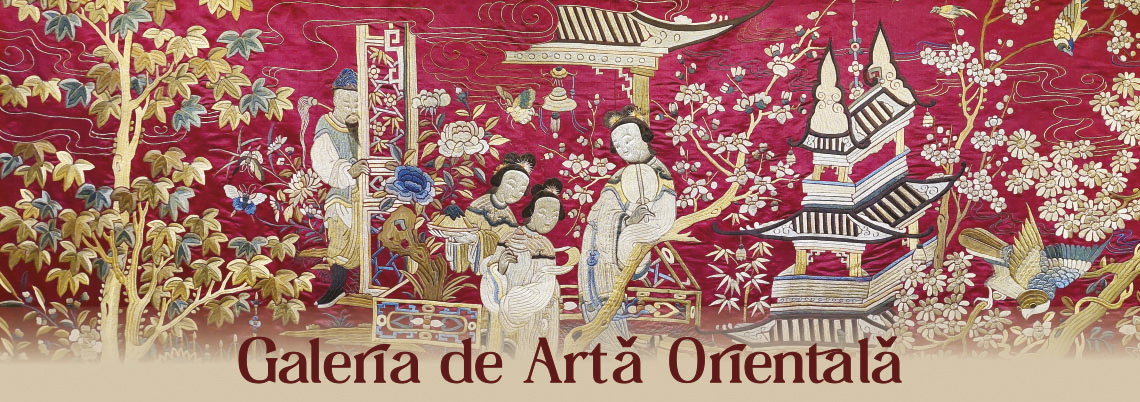
Located on the third floor of the National Museum of Art of Romania central building on Calea Victoriei, alongside the European Decorative Arts Gallery, the Oriental Art Gallery shows nearly 600 art objects from Azerbaijan, Bulgaria, China, Dagestan, Egypt, Greece, India, Iran, Japan, Syria, Turkey, Turkmenistan, and Uzbekistan. The pieces are selected from the most significant and valuable collection of Oriental and Far Eastern art in the country, managed by NMAR.
The creation of this new permanent exhibition, unique in Romania, is the result of a collaborative effort involving museum curators, conservators, restorers, technicians and management as well as several partners, sponsors, and donors who supported the project over time: the "Friends of NMAR" Association, JTI, BRD Groupe Societe Generale, Camelia Șucu, Raiffeisen BANK, Coca-Cola Romania, Romcar, Banca Comercială Română, Tomini Trading, TNT Romania, Solmar Trading Group, Soft Medica, Romtelecom, Unilever, Veronica Savanciuc, ITH Management Office, CitiBank Romania, Leadership Development Romania, National Bank of Romania, Topo Capital Corporation, Domeniile Sâmburești and AQUA Carpatica.
Reopening of The European Decorative Art Gallery, 15th of January 2024
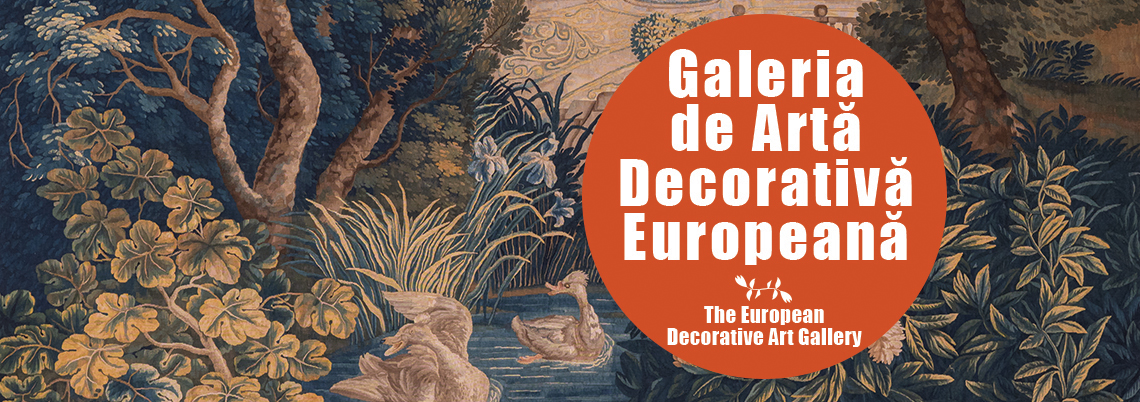
With an area of over 400 square meters, the European Decorative Art Gallery, composed of six rooms, illustrates four centuries of history of taste and refinement, innovations, manufactures and European craftsmen from Austria, Belgium, the Czech Republic, Switzerland, France, Germany, Italy, Holland, Spain, Russia from the 16th-19th centuries and completes the museum's permanent exhibition, alongside the European Art Gallery and the National Gallery.
Included in the exhibition is a wonderful marriage box made in Dresden in 1586, ceramics from the famous faience factories of Delft (Netherlands), Manises (Spain), Montelupo Fiorentino and Savona (Italy), Rouen, Moustiers and Sèvres (France), Meissen (Germany), Provençal furniture and French tapestries, as well as special silver pieces alongside the famous Bohemian crystal glasses. The craftsmanship of Russian craftsmen can be admired in the delicate cloisonné silver pieces, the niello silver glasses or the Punch Bowl made by the famous Fabergé workshop. Also, a precious collection of watches illustrates the excellence of jewelers and watchmakers from the most important workshops in Europe.
The presence of these objects in Romania attests to the fact that our country has always been in a European circuit of exchanges of cultural values.
Europe was not only the space for the manifestation of secular practices in the artistic field, but also a place where the creative input from other continents merged into defining expressions of the exceptionality of the human spirit. These varied cultural influences have, over time, contributed to the definition of a European identity that is also reflected in the gallery display.
The opening of the European Decorative Art Gallery is due to a passionate and involved team from the National Art Museum of Romania, made up of museographers, conservators, restorers and technicians, but also to an important contribution of sponsors and partners without whom this far-reaching project would not be possible. would have been possible: Association "Friends of MNAR", Raiffeisen BANK, Camelia Șucu, Coca-Cola Romania, Romcar, Banca Comercială Română, Tomini Trading, TNT Romania, Solmar Trading Group, Soft Medica, Romtelecom, Unilever, Veronica Savanciuc, ITH Management Office, CitiBank Romania, Leadership Development Romania, Banca Națională a României, Topo Capital Corporation.
The spaces that house this gallery have gone through an extensive redevelopment process, being heavily affected by the earthquake in 1986 and the fire in 1989. The opening required the creation of showcases in accordance with the latest standards in the field, ensuring both security and high standard display.
The European Decorative Art Gallery benefits, for the first time, from a digital component, the MyMNAR application, to be used during the visit in the gallery to complement the exhibition course in an interactive way.
Access to the European Decorative Art Gallery is through entrance A2, floor 3, Calea Victoriei 49-53, Bucharest, Wednesday - Friday, 10:00 - 18:00 and Saturday- Sunday, 11:00 - 19:00.
Discover our collections!
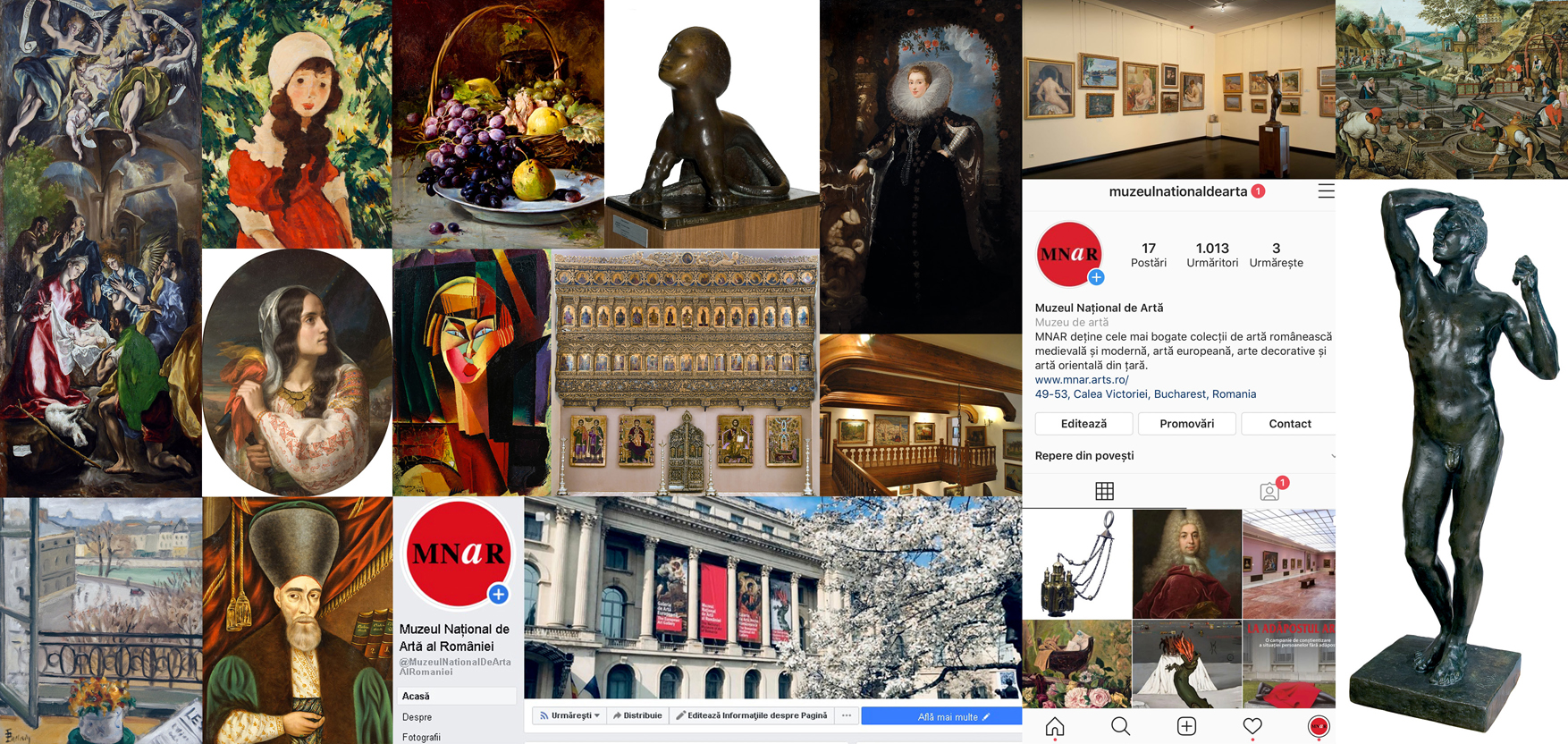
The National Museum of Art of Romania, the Art Collections Museum, the Theodor Pallady Museum and the K. H. Zambaccian Museum can be visited from Wednesday to Sunday, between 10:00 and 18:00.
You can also follow us on Facebook and Instagram and access more information on this website.
#aproapedeARTA #MNAR
The National Museum of Art of Romania is the country’s prime holder of Romanian, European and Oriental art. Located in the former Royal Palace in Bucharest, it includes the National Gallery (Romanian medieval and modern art) and the European Art Gallery. Apart from numerous temporary exhibitions, visitors can also join guided tours of the former Throne Hall and other spaces of historical relevance.
The Art Collections Museum, the K.H. Zambaccian Museum and the Theodor Pallady Museum are equally part of the National Museum of Art of Romania.
***

VIRTUAL GALLERY OF ORIENTAL ART. COLLECTION OF ISLAMIC ART
The collection of Islamic art at the National Museum of Art in Romania is the most significant of its kind in Romania, comprising approximately 1,400 pieces dating from the 7th to the 20th century.

The Unseen Part of the Lucia Dem. Bălăcescu Collection
Curators of the exhibition: Liliana Chiriac and Ilinca Damian
The Art Collections Museum
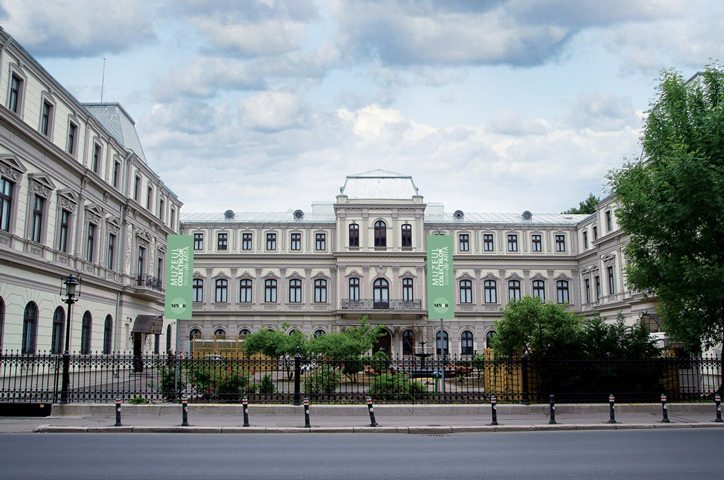
Inaugurated in 1978 as a Department of the National Museum of Art of Romania, the Art Collections Museum showcases artistic interests that prevailed in Romanian society from the early 20th century onward. Over 30 collections on permanent display incorporate a variety of art pieces and collectibles, ranging from Romanian and European fine and decorative arts to Oriental art. Donated over nearly a century by both collectors and artists, they bear witness to their owners’ taste and economic power, their leaning toward famous names or contemporary art, as well as to the artists’ particular interests, surroundings, and daily studio practice. Works by well-known Romanian painters such as Theodor Aman, Nicolae Grigorescu, Ioan Andreescu, Nicolae Tonitza, Gheorghe Petraşcu, Theodor Pallady, Lucian Grigorescu, Iosif Iser, Camil Ressu, Francisc Şirato, Alexandru Ciucurencu, Dimitrie Ghiaţă are exhibited alongside European and Japanese prints and drawings, French furniture, Oriental carpets, and folk icons from Transylvania. This unique museum is hosted by the former Romanit palace. The building, an example of modern Bucharest architecture, was recently restored and refurbished. Wherever possible, displays suggest the original layout and atmosphere of individual collections.


